

How to Start a Commercial Drone Operation in Australia
Summary
Starting a commercial drone operation in Australia looks like a technology decision and turns out to be a regulatory one. The baseline certificates are the easy part. The line that decides your business model is whether you need to fly beyond visual line of sight, and since 11 May 2026 that line runs through AusSORA.
Key Takeaways
- The baseline commercial requirements are a remote operator certificate (ReOC) and a remote pilot licence (RePL). Whether you also need BVLOS approval depends on the operation.
- Since 11 May 2026 new BVLOS applications must follow CASA's AusSORA framework, built around Advisory Circular AC 101-06 and replacing the interim instrument TMI 2024-03.
- AusSORA applications are built on bespoke safety cases, containment requirements and operational safety objectives, and CASA assessment may take several months from payment.
- The business model decides the regulatory load, so the model should be designed against the framework before capital is committed, not after.
- The certificates are gates, not strategy. The operators who sequence the gates against their commercial plan reach revenue while the others reach requisitions.
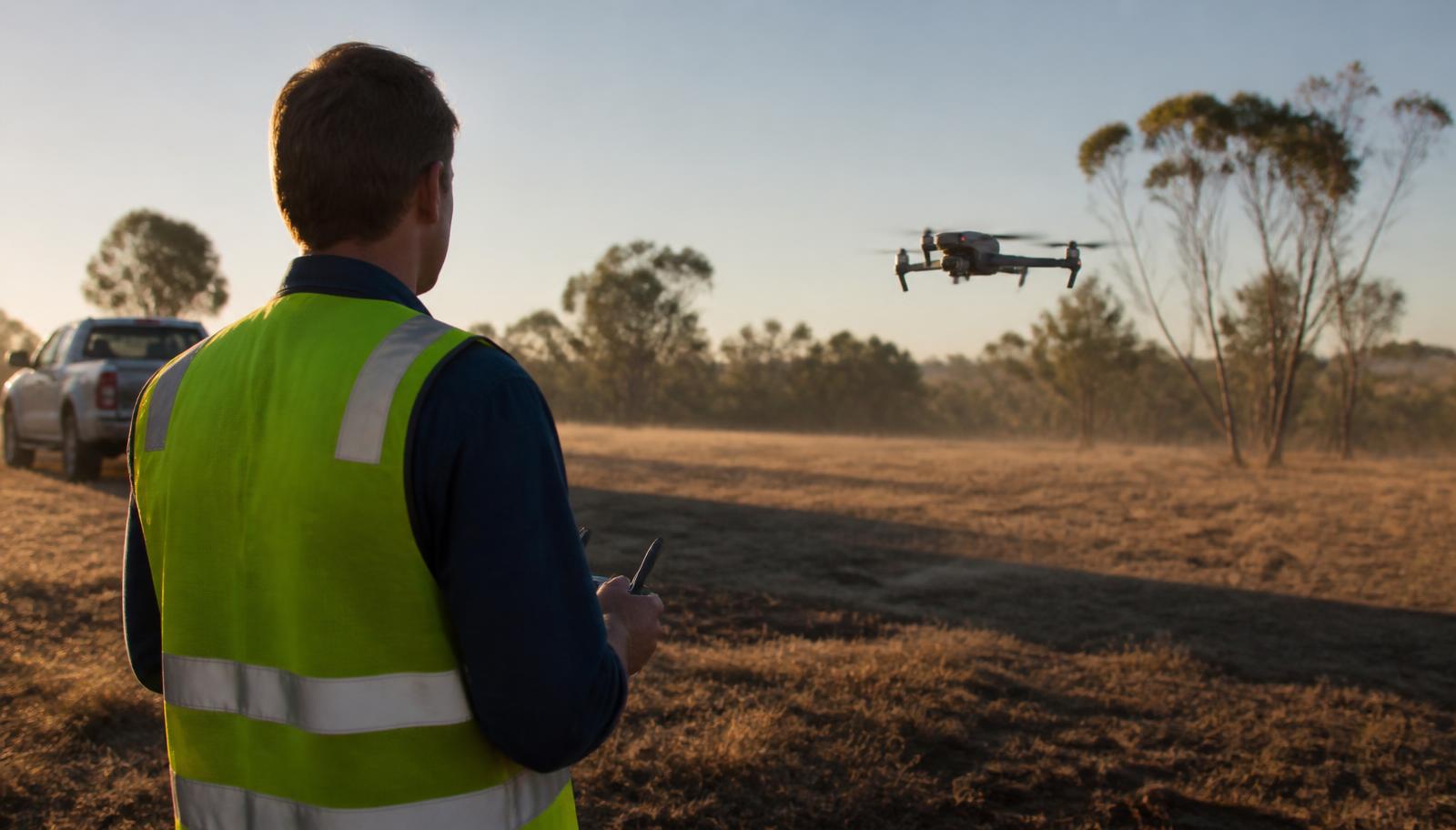
Starting a commercial drone operation in Australia looks like a technology decision and turns out to be a regulatory one. The aircraft is the easy purchase. The hard question is which regulatory tier your business model actually lives in, because that answer decides your capital requirements, your timeline to revenue and whether the operation you are imagining is the operation you will be allowed to run. Since 11 May 2026 the most consequential version of that question runs through a framework called AusSORA.
In Brief
- The baseline commercial requirements are a remote operator certificate (ReOC) and a remote pilot licence (RePL).
- Whether you need beyond visual line of sight (BVLOS) approval depends on the operation, and it is the single biggest fork in the regulatory road.
- CASA's AusSORA framework for BVLOS operations came into effect on 11 May 2026, built around Advisory Circular AC 101-06 of April 2026. New applications from that date must follow it.
- AusSORA replaced the interim instrument TMI 2024-03 and is Australia's adaptation of the international SORA process.
- Applications are built on bespoke safety cases, containment requirements and operational safety objectives, and CASA assessment may take several months from payment.
The Business Model Decides the Regulatory Load
Most founders approach this backwards. They pick the aircraft, sketch the service and then ask what approvals the plan needs. The better question is the reverse: given what each regulatory tier costs in time, evidence and capital, which version of the business should you build first?
A survey operator flying within visual line of sight over its own client's paddock and a delivery network flying beyond visual line of sight over a regional town are both drone businesses. They do not live in the same regulatory universe. One can be operating in a season. The other is building a safety case whose assessment alone may take several months from payment, before a single parcel moves. Investors price that difference even when founders do not.
The Baseline: ReOC and RePL
The baseline commercial requirements are a remote operator certificate, the ReOC, held by the business, and a remote pilot licence, the RePL, held by the person flying. These are the table stakes of commercial operation and a large share of viable drone businesses never need more than this tier plus the standard operating conditions that come with it.
The trap at this level is not difficulty. It is complacency. Operators structure the company, the insurance and the client contracts around the baseline tier and then discover that the growth plan, the one the business case was sold on, quietly assumed operations the baseline does not permit. Retrofitting a regulatory strategy onto a live business is slower and more expensive than designing one, and it is done under commercial pressure with clients already signed.
The Line That Changes Everything: BVLOS
Beyond visual line of sight is where drone operations stop being a niche service and start being infrastructure. Linear asset inspection, broadacre agriculture, remote area logistics and delivery at scale all depend on the aircraft going where the pilot cannot see it. Whether you need BVLOS approval depends on the operation, and if you do, you are now inside AusSORA.
AusSORA came into effect on 11 May 2026. It is Australia's adaptation of the international SORA process, the Specific Operations Risk Assessment, and it is built around Advisory Circular AC 101-06 published in April 2026. It replaced the interim instrument TMI 2024-03, and new applications from 11 May 2026 must follow it. The practical shift is this: a BVLOS application is not a form. It is a bespoke safety case, supported by containment requirements and operational safety objectives, in which you demonstrate that your specific operation over your specific ground risk is acceptably safe. The framework's updated iGRC ground risk table even includes a population band for extremely remote areas with fewer than 0.5 people per square kilometre, which tells you how granular the analysis has become. Where you fly is now a design input, not a detail.
Where New Operators Lose the Year
The failure pattern is consistent. The operation is designed commercially, the application is written to justify it after the fact, the safety case asserts what it should evidence and the containment strategy is bolted on. Each weakness surfaces during assessment, when the burn rate is live and the clients are waiting. The operators who move fastest are not the ones with the best aircraft. They are the ones whose operation was designed against the framework from the start, so the safety case writes itself as an argument rather than an apology.
That design work is where legal strategy earns its keep. What your operation must demonstrate, what it cannot yet demonstrate and how honestly to sequence the gap is a privileged conversation when you have it with a lawyer and an exhibit when you have it anywhere else.
Frequently Asked Questions
Do I need a ReOC to fly drones commercially in Australia?
A remote operator certificate and a remote pilot licence are the baseline commercial requirements. Whether your particular activity needs them, and whether it needs more, depends on the operation, which is why the analysis should come before the aircraft order.
When do I need BVLOS approval?
When the operation depends on the aircraft flying beyond the pilot's visual line of sight. Whether that is essential to your model or merely attractive is the fork that decides your regulatory pathway, and it deserves a deliberate decision rather than a default.
What is AusSORA?
CASA's framework for BVLOS operations, in effect from 11 May 2026 and built around Advisory Circular AC 101-06. It replaced the interim instrument TMI 2024-03 and adapts the international SORA process for Australia. Applications under it are built on bespoke safety cases, containment requirements and operational safety objectives.
How long does it take to get a drone business flying?
The baseline tier and the BVLOS tier run on different clocks. CASA assessment of BVLOS approvals may take several months from payment, and the safety case build sits in front of that. The realistic timeline for your model is a Phase 1 question, not a guess.
Should the regulatory strategy come before the business plan?
They should be written together. The regulatory tier decides the capital requirement and the timeline to revenue, which are the two numbers every investor asks about first.
Designing a commercial drone operation and want the regulatory load mapped before the capital is committed? Start with our BVLOS approvals page, then Contact Astris Law or call (07) 3519 5616.
Sources and References
- RegulatorCASA, Advisory Circular AC 101-06 (April 2026)
This article is for general information purposes only and does not constitute legal advice and should not be relied on as such. While we take reasonable care to ensure the accuracy of the information provided, we make no representations or warranties as to its completeness, currency or reliability. We accept no liability for any loss or damage arising directly or indirectly from the use of, or reliance on, this website's content. You should always seek professional advice tailored to your specific circumstances before acting on any information in this article. Liability limited by a scheme approved under Professional Standards Legislation.
Planning a commercial drone operation?
The business model decides the regulatory load, and the cheapest time to design one against the other is before anything is lodged. Astris Law offers a fixed fee feasibility phase, protected by legal professional privilege. Book a call back on (07) 3519 5616.