

EV Charging Networks: The Regulatory Stack
Summary
An EV charging network looks like hardware plus an app. Underneath it sits a stack of regulatory questions about retailing, metering and network services whose answers turn on the specific arrangement. The structure chosen at site one gets replicated across the network, for better or worse.
Key Takeaways
- EV charging raises boundary questions about retailing, metering and network services, and the answers turn on the specific arrangement.
- Selling electricity generally requires a retailer authorisation or an exemption from the Australian Energy Regulator, with exemption classes whose conditions depend on the arrangement.
- Charging sites inside apartment buildings, shopping centres and precincts often sit within embedded networks, which have their own rules.
- The structure chosen at site one is replicated across the network, so early structural decisions carry the economics of the rollout.
- Energy is becoming approvals currency for large infrastructure, which raises the value of getting the energy structure right early.
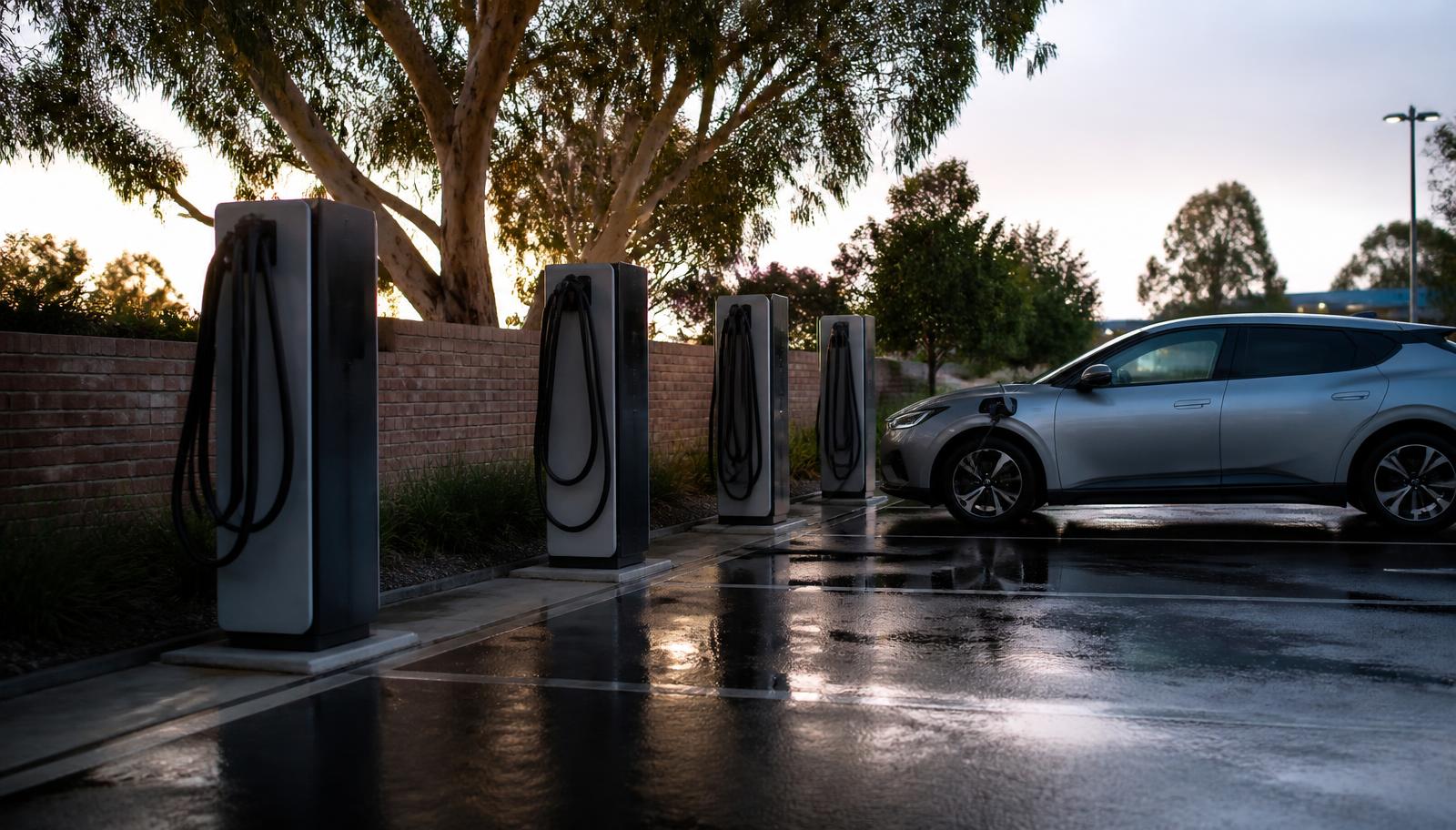
From the driver's side an EV charging network is refreshingly simple: plug in, charge, pay, leave. From the operator's side it is one of the more layered regulatory propositions in the new energy economy. Underneath every session sits a stack of questions about retailing, metering and network services, and the answers turn on the specific arrangement rather than on anything printed in the app. The operators who understand the stack design their networks around it. The operators who do not are building the same unexamined structure over and over, one site at a time.
In Brief
- Selling electricity in Australia generally requires a retailer authorisation or an exemption from the Australian Energy Regulator.
- Whether a charging session is a sale of electricity is a boundary question that turns on the arrangement.
- EV charging also raises metering and network services questions, not just the retailing one.
- Sites in apartment buildings, shopping centres and precincts often sit inside embedded networks with their own rules.
- The structure at site one gets replicated across the rollout, which makes early structural decisions the expensive ones.
The First Layer: Is a Session a Sale?
Start with the question the whole stack rests on. Selling electricity in Australia generally requires a retailer authorisation or an exemption from the Australian Energy Regulator. So is a charging session a sale of electricity, or a charging service that happens to involve electricity? That sounds like a philosophical distinction. It is actually a structural one, and the answer turns on how the arrangement is put together: what the customer is buying, how it is priced, whose electricity it is and what rights sit behind the transaction.
Because the answer follows the arrangement, it is also a design choice. Two networks charging drivers similar amounts for similar sessions can occupy different regulatory positions because they structured the underlying arrangement differently. That cuts both ways. It means there is usually a workable path for a well advised operator. It also means an operator who never asked the question has a position by accident, and accidental positions have a way of being the wrong ones.
The Layers Underneath
Retailing is only the first layer. EV charging raises boundary questions about metering and network services too, and each layer has its own logic. Measuring what flows through a charger and billing on it walks into metering territory. Infrastructure that carries electricity to and through sites raises network services questions. None of these layers answers itself, and the answer at one layer can change the analysis at another, which is why picking off the questions one at a time tends to produce a stack of individually plausible answers that do not fit together.
Then there is the question of where the charger physically sits. A meaningful share of attractive charging sites are inside apartment buildings, shopping centres and precincts, and many of those sit within embedded networks, a common structure with its own rules. Put a charger behind someone else's embedded network and your regulatory analysis now includes their structure, their arrangements and their compliance posture. The site host agreement that looked like a simple licence to occupy a car park corner is quietly carrying all of that.
Site One Is the Network
Charging is a rollout business. The commercial model depends on standardisation: the same hardware, the same app, the same host agreement and the same pricing logic, replicated across dozens or hundreds of sites. Which means whatever structure you settle at site one, deliberately or by default, is the structure you are scaling. If the position underneath it is sound, standardisation is your friend. If it is not, you are manufacturing the same defect at every site, and the eventual correction costs are multiplied by the size of the network you were proudest of.
This is why the regulatory work belongs at the pilot stage, not the scale stage. The questions are answerable, the structures are designable and the cost of the analysis is fixed while the cost of the retrofit grows with every site energised.
The Bigger Board
One more reason to take the energy layer seriously: energy position is becoming strategic currency well beyond charging. Data centres are creating a new class of large energy counterparties, and power arrangements are increasingly part of how large projects win approval priority. The Commonwealth released national Expectations for data centre and AI infrastructure developers in March 2026 that include supporting the energy transition. The direction is clear across the whole infrastructure economy: how a project relates to the energy system is moving from a utilities line item to a strategic variable. Charging networks sit inside that shift, as visible energy transition infrastructure whose own regulatory house needs to be in order. The operators who can demonstrate a clean, deliberate energy structure will find that it opens doors that hardware alone does not.
Frequently Asked Questions
Do EV charging networks need a retailer authorisation?
It depends on the arrangement. Selling electricity generally requires a retailer authorisation or an exemption from the Australian Energy Regulator, and whether a charging model involves selling electricity at all turns on how the arrangement is structured. The answer is specific to your network, which is why it should be established before the rollout rather than during it.
Can an exemption cover a charging network?
Exemption classes exist and their conditions depend on the arrangement. Whether a class fits a charging model, on what conditions and with what obligations is an analysis of the specific structure, not a category level assumption.
What changes when a charger sits inside an apartment building or shopping centre?
Those sites often sit within embedded networks, which are a common structure with their own rules. Your analysis then has to account for the host's structure as well as your own, and the site host agreement becomes a more consequential document than it looks.
We already have sites live. Is it too late to fix the structure?
No, but the economics worsen with every site added on the unexamined model. A live network can be reviewed and restructured. The earlier that happens, the more of the correction is design and the less of it is retrofit.
If you are building or scaling a charging network, get the stack examined before it is replicated. Read more on our energy market entry page, Contact Astris Law for a fixed fee consultation or call (07) 3519 5616.
This article is for general information purposes only and does not constitute legal advice and should not be relied on as such. While we take reasonable care to ensure the accuracy of the information provided, we make no representations or warranties as to its completeness, currency or reliability. We accept no liability for any loss or damage arising directly or indirectly from the use of, or reliance on, this website's content. You should always seek professional advice tailored to your specific circumstances before acting on any information in this article. Liability limited by a scheme approved under Professional Standards Legislation.
Rolling out charging infrastructure?
The regulatory position underneath your sessions, sites and host agreements decides whether the network scales cleanly or replicates a problem. Astris Law offers a fixed fee consultation protected by legal professional privilege. Book a call back on (07) 3519 5616.