

QCAT Lawyer: When You Need Legal Help at the Queensland Civil and Administrative Tribunal
A practical guide to QCAT proceedings, covering what QCAT handles, when a lawyer can represent you, the leave requirements under section 43 of the QCAT Act, costs, enforcement and the practical steps for getting the best outcome.
Summary
QCAT is designed to be accessible. It is not a court. It is a tribunal, and the default position is that parties represent themselves. But “accessible” does not mean “simple”. This guide covers what QCAT handles, when a lawyer can represent you, leave under section 43, costs, enforcement and the practical steps for getting the best outcome.
Key Takeaways
- QCAT is established by the Queensland Civil and Administrative Tribunal Act 2009 (Qld). It is not a court. It is a tribunal with original, review and appeal jurisdiction across a wide range of matters.
- The default position under section 43(2)(a) is that parties appear without representation. Legal representation requires either an automatic right (disciplinary proceedings, children, persons with impaired capacity) or leave from the tribunal.
- Leave to be represented is governed by section 43(3). The tribunal may consider whether the party is a State agency, whether the proceeding involves complex questions of fact or law, whether the other party is represented and whether all parties have agreed.
- Even where a lawyer does not appear in the hearing, a lawyer can advise on strategy, draft submissions and evidence, prepare you for the hearing, negotiate settlement and handle enforcement of the order.
- QCAT generally does not award costs. Each party bears their own costs under section 100 of the QCAT Act. There are limited exceptions under section 102 for unreasonable conduct or non-compliance.
- QCAT orders are not self-enforcing. You must register the order with the appropriate court before you can use court enforcement mechanisms to recover money.
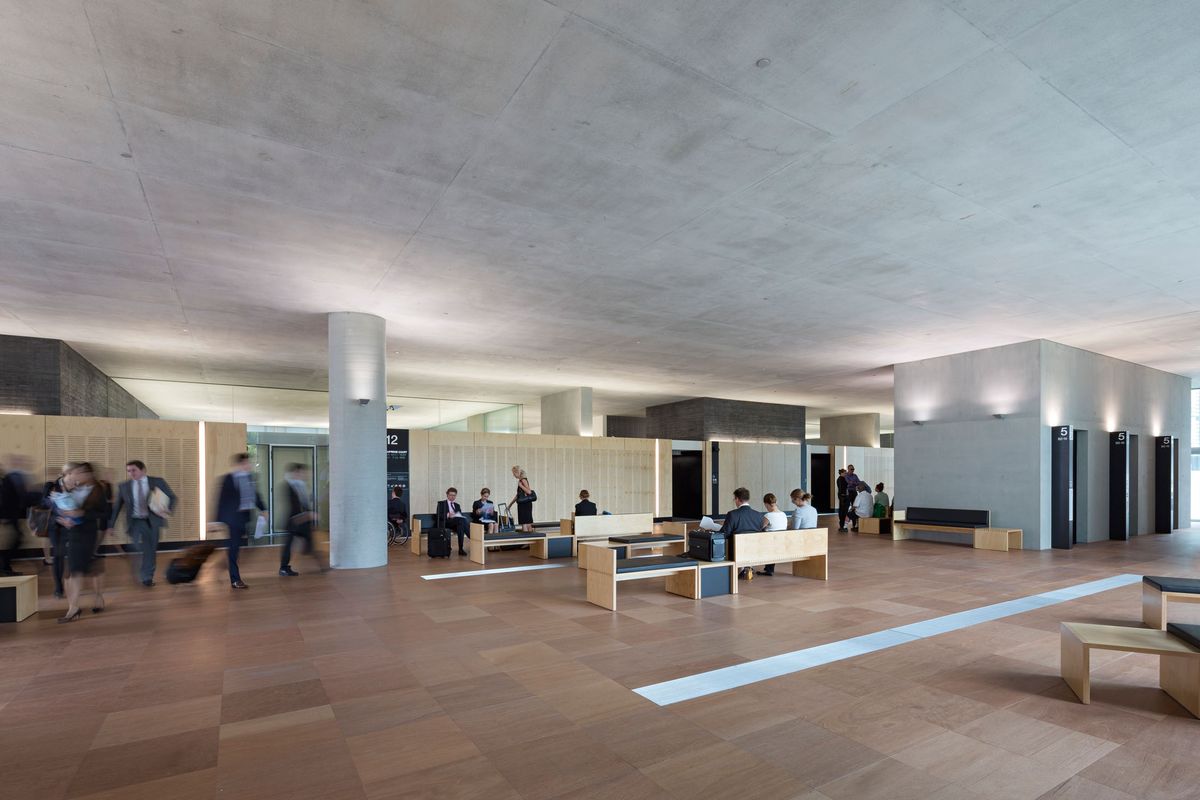
QCAT is designed to be accessible. It is not a court. It is a tribunal, and the default position is that parties represent themselves. But “accessible” does not mean “simple”. QCAT handles everything from $500 debt disputes to $750,000 building claims, disciplinary proceedings against doctors and lawyers, retail lease disputes, transfer duty objections and anti-discrimination complaints. Some of these matters involve complex questions of law and fact that a self-represented party will struggle to navigate alone.
The question most people searching for a QCAT lawyer need answered is this: can I actually have a lawyer represent me at QCAT? The answer depends on what type of proceeding you are in. In disciplinary matters, lawyers can appear as of right. In everything else, you need leave from the tribunal under section 43 of the Queensland Civil and Administrative Tribunal Act 2009 (Qld). And even where a lawyer cannot appear in the hearing room, there is a great deal a lawyer can do behind the scenes to improve your position.
Need help with a QCAT matter? Contact Astris Law on (07) 3519 5616. We advise on and appear in QCAT proceedings across Queensland.
What Is QCAT?
The Queensland Civil and Administrative Tribunal is established by the Queensland Civil and Administrative Tribunal Act 2009 (Qld). It began operating on 1 December 2009, replacing a number of earlier tribunals.
QCAT is not a court. It sits alongside the court system as an independent tribunal. It is designed to resolve disputes in a way that is accessible, fair, just, economical, informal and quick. In practice, QCAT proceedings are less formal than court proceedings, the rules of evidence are relaxed and the emphasis is on resolving disputes rather than strict procedural compliance.
QCAT has three types of jurisdiction. Original jurisdiction, where QCAT makes a first-time decision on a matter. Review jurisdiction, where QCAT reviews a decision already made by a government or statutory agency. And appeal jurisdiction, where QCAT considers appeals from lower bodies.
The tribunal is based in Brisbane at Level 11, 259 Queen Street, with registries across Queensland.
What QCAT Handles
QCAT’s jurisdiction is broad. The matters most relevant to commercial clients include:
Minor civil disputes up to $25,000. This covers debt recovery (unpaid invoices, loan repayments, amounts owed for goods or services), consumer and trader disputes (defective goods or services, non-supply) and motor vehicle property damage claims. This is the bread and butter of QCAT’s civil work.
Building and construction disputes. QCAT has jurisdiction over defective or incomplete building work, breaches of building contracts and unpaid debts under construction agreements, under the Queensland Building and Construction Commission Act 1991 and the Building Industry Fairness (Security of Payment) Act 2017. There is no monetary limit for domestic building disputes. For commercial building disputes, QCAT can decide claims up to $50,000 (minor commercial building disputes) as of right. A larger commercial building dispute can only be decided by QCAT if all parties agree; otherwise it must go to a court. There is a mandatory pre-step: you must participate in the QBCC dispute resolution process before applying to QCAT and provide the QBCC outcome letter with your application.
Retail shop lease disputes up to $750,000, under section 103 of the Retail Shop Leases Act 1994. These are disputes between tenants and landlords about lease terms, rent, outgoings, assignment, termination and market rent. There is a mandatory pre-step here too: you must attempt mediation through the Queensland Small Business Commissioner before applying to QCAT.
Disciplinary proceedings. QCAT hears disciplinary matters involving doctors, lawyers, engineers, property agents, architects, building practitioners and other regulated professionals. These are brought by the relevant regulatory authority, not by individuals. Critically, lawyers can appear as of right in disciplinary proceedings without needing leave from the tribunal.
State revenue objections. QCAT has review jurisdiction over decisions by the Commissioner of State Revenue, including transfer duty and duty aggregation objections relevant to property developers. These fall under the Duties Act 2001.
Anti-discrimination complaints. QCAT hears complaints of unlawful discrimination referred by the Queensland Human Rights Commission under the Anti-Discrimination Act 1991. There are no filing fees for human rights division matters.
Residential tenancy disputes. Bond refunds, damage claims, repair obligations, rent arrears and breaches of tenancy terms under the Residential Tenancies and Rooming Accommodation Act 2008.
Can a Lawyer Represent You at QCAT?
This is the question that brings most people to this page. The answer is more nuanced than you might expect.
The default position
Section 43(2)(a) of the QCAT Act provides that a party may appear without representation. This is deliberate. The tribunal is designed around the expectation that parties will represent themselves. Unlike a court, where legal representation is the norm, QCAT starts from the opposite premise.
When lawyers can appear as of right
Section 43(2)(b) provides that a party may be represented by someone else if:
The party is a child or a person with impaired capacity (section 43(2)(b)(i)). This is self-explanatory.
The proceeding relates to taking disciplinary action, or reviewing a decision about taking disciplinary action, against a person (section 43(2)(b)(ii)). This is significant. If you are a doctor, lawyer, engineer, property agent or other regulated professional facing disciplinary proceedings at QCAT, you have an automatic right to legal representation. No application for leave is needed.
An enabling Act or the QCAT Rules states the person may be represented (section 43(2)(b)(iii)). Some enabling legislation specifically provides for legal representation.
When you need leave
For everything else, you need leave from the tribunal: section 43(2)(b)(iv).
Section 43(3) sets out the factors the tribunal may consider as circumstances supporting the giving of leave:
The party is a State agency (section 43(3)(a)). If you are up against a government body that has its own legal team, this factor weighs in favour of you being allowed representation too.
The proceeding is likely to involve complex questions of fact or law (section 43(3)(b)). This is the most commonly relied upon factor. Building disputes involving technical defect evidence, retail lease disputes turning on interpretation of lease provisions and state revenue objections involving duty aggregation are all examples where complexity may justify representation.
Another party to the proceeding is represented (section 43(3)(c)). If the other side has a lawyer, fairness supports you having one too.
All of the parties have agreed to the party being represented (section 43(3)(d)). If both sides want lawyers involved, the tribunal is unlikely to refuse.
These factors are non-exhaustive. The tribunal “may consider” them as circumstances supporting leave, which means other circumstances can also be relevant.
The practical reality
Leave applications are made on Form 56. If your matter involves genuine legal complexity, a power imbalance between the parties or the other side is legally represented, your prospects of obtaining leave are reasonable. But it is not guaranteed, and you should be prepared for the possibility that the tribunal may refuse leave and expect you to represent yourself.
How a Lawyer Helps Even Without Appearing
Here is the point that most people miss: even if a lawyer cannot appear for you in the hearing room, a lawyer can still make a significant difference to your outcome.
Before the hearing, a lawyer can assess whether QCAT is the right forum or whether you would be better off in a court. A lawyer can advise on the strength of your case, the evidence you need and the orders available to you. A lawyer can draft your application or response, your submissions and your evidence. In building disputes, where expert evidence is often critical, a lawyer can help you commission and present expert reports properly.
During the hearing, if you are appearing for yourself, a lawyer can prepare you for what to expect, help you formulate your questions for witnesses and ensure your submissions address the legal issues the tribunal needs to decide.
At mediation or compulsory conference, a lawyer can advise on settlement strategy and help you evaluate whether an offer is reasonable. QCAT refers many matters to mediation or compulsory conference before hearing, and the decisions made at that stage often determine the outcome.
After the decision, a lawyer can advise on whether there are grounds for appeal (you have 28 days, and the deadline is strict) and handle enforcement of the order if the other party does not comply.
On costs agreements, QCAT has jurisdiction under section 328(1A) of the Legal Profession Act 2007 to hear applications to set aside legal costs agreements. Practice Direction No. 2 of 2015 sets out the procedure. If you are in a dispute with your own lawyer about fees, this is one pathway.
The QCAT Process
Application
Proceedings are commenced by filing an application with the QCAT registry. This can be done online through the QCase portal or on paper. You pay the applicable filing fee (fees are indexed annually and are available on the QCAT website). There are no filing fees for human rights division matters including anti-discrimination complaints.
Service
Once the application is filed, the applicant must serve it on the respondent. The respondent then has 28 days to file a response. The applicant must serve the application within 90 days of lodging it.
Mandatory pre-steps
Some matters require you to complete a dispute resolution process before you can apply to QCAT.
For building disputes, you must participate in the QBCC dispute resolution process and obtain an outcome letter from the QBCC. You must provide this letter with your QCAT application. If you skip this step, your application may be rejected.
For retail shop lease disputes, you must attempt mediation through the Queensland Small Business Commissioner before applying to QCAT. This can be a source of frustration for parties who want to move quickly, but it is a mandatory procedural requirement.
Mediation and compulsory conference
QCAT frequently refers matters to mediation or a compulsory conference before hearing. For minor civil disputes, claims of $1,500 or more are typically referred to mediation first and only proceed to a hearing if the mediation does not resolve the matter. Claims under $1,500 go straight to a hearing.
Compulsory conferences are led by a QCAT member or adjudicator and are used to identify and clarify issues, promote settlement and, if settlement is not reached, make directions for the further conduct of the proceeding. Discussions at compulsory conferences are confidential and cannot be used in later proceedings unless the parties agree.
Practice Direction No. 6 of 2010 governs compulsory conferences and mediations.
The hearing
Hearings can be conducted in person, by phone or by video (Practice Direction No. 10 of 2022 covers remote conferencing). Some matters are decided “on the papers” based on written submissions without an oral hearing.
If you are attending a hearing, Practice Direction No. 1 of 2014 sets out the hearing protocol. Business attire is required. Parties must stand when the tribunal opens and closes. The correct form of address depends on the presiding member: “Your Honour” for a Judge, “Senior Member” for a Senior Member, “Member” followed by surname for a Member and “Mr” or “Ms” for an Adjudicator or Justice of the Peace.
Document requirements
Practice Direction No. 3 of 2024 specifies formatting requirements for documents filed in the tribunal. Documents must be in 12-point Times New Roman or 11-point Arial, printed double-sided, with no less than 1.5 line spacing. Practice Direction No. 10 of 2025 addresses the accuracy of references in submissions. These are compliance points that self-represented parties routinely get wrong.
Costs
The general rule at QCAT is that each party bears their own costs: section 100 of the QCAT Act. This means that even if you win, you will not ordinarily recover your legal costs from the other side. And if you lose, you will not ordinarily be ordered to pay the other side’s costs either.
This cuts both ways. For small claims, the no-costs rule makes QCAT an attractive forum because you can bring a claim without the risk of an adverse costs order if you lose. For complex disputes, the economics can be punishing. In Cowen v QBCC [2018] QCAT 385, homeowners spent substantial amounts on legal representation in a building dispute despite a $400,000 maximum claim value. The matter went to appeal in Cowen v QBCC [2021] QCATA 103, further increasing costs. This illustrates the reality that in complex, long-running QCAT proceedings, legal costs can approach or exceed the value of the claim itself, and you will not recover those costs even if you succeed.
There are limited exceptions. Under section 102, QCAT may award costs in general civil disputes if the interests of justice require it. The tribunal will consider whether a party acted to unnecessarily disadvantage another party, failed to comply with tribunal orders or directions without reasonable excuse, failed to comply with the QCAT Act or enabling Act or failed to attend a mediation or hearing without reasonable excuse. Unreasonable conduct is the common thread.
Settlement offers also affect costs. If one party makes a settlement offer that is rejected, and QCAT’s decision is not more favourable to the rejecting party than the offer was, the offering party may recover their reasonable costs incurred after the offer. This is an important tactical tool.
For minor civil disputes, the costs regime is even more restricted. In non-debt disputes, QCAT may only order the respondent to pay the applicant’s filing fee. In debt disputes, recoverable costs are limited to the application fee, electronic filing fees and service and travelling allowances at bailiff rates: Rules 83 and 84 of the QCAT Rules 2009.
Enforcement
Winning at QCAT is only half the battle. QCAT orders are not self-enforcing. If the other party does not comply with the order voluntarily, you need to take further steps to enforce it.
The process is to register the QCAT order with the appropriate court. You obtain a certified copy of the QCAT decision, prepare a sworn statement or affidavit confirming the amount that remains unpaid and file both with the court registry. Registration is free.
The court you file with depends on the amount:
- Magistrates Court for amounts up to $150,000.
- District Court for amounts between $150,001 and $750,000.
- Supreme Court for amounts over $750,000.
Once registered, the QCAT order has the full force of a court order and you can use standard court enforcement mechanisms: enforcement warrants including garnishee and redirection orders against earnings, bank accounts and debts owed to the judgment debtor. For debts over $10,000 owed by individuals, you can issue a bankruptcy notice. For company debtors, you can issue a statutory demand under the Corporations Act 2001 (Cth), and failure to comply creates a presumption of insolvency.
You have six years from the date of the QCAT order to enforce it, under the Uniform Civil Procedure Rules 1999 (Qld).
This enforcement process is where many self-represented parties come unstuck. They assume that once they have a QCAT order in their favour, the other party will simply pay. When they do not, the successful party is left holding a piece of paper they do not know how to turn into money. This is one of the most common reasons people seek legal help after a QCAT hearing.
QCAT or Court?
QCAT is not the only option for many disputes. Understanding when QCAT is the better forum and when a court is preferable is an important strategic decision.
QCAT may be the better choice when: the claim is within the minor civil dispute threshold ($25,000), you want to minimise costs exposure (no adverse costs risk under the general rule), the matter is relatively straightforward, speed is important or you are comfortable representing yourself or can obtain leave for representation.
A court may be the better choice when: the amount exceeds QCAT’s jurisdiction, you want your lawyer to appear as of right without needing leave, the matter is sufficiently complex that full court procedures (discovery, subpoenas, cross-examination under the rules of evidence) are needed, you want the ability to recover costs if you succeed or you need interlocutory relief (injunctions, freezing orders) that QCAT cannot grant.
For building disputes, the choice is particularly pointed. If it is a commercial building dispute, the claim exceeds $50,000 and the other party does not consent to QCAT jurisdiction, you must go to court. Even where QCAT has jurisdiction, the no-costs rule means you will bear your own legal costs regardless of outcome. For a complex defect claim requiring expert evidence, those costs can be substantial.
For retail shop lease disputes, QCAT generally has exclusive jurisdiction under section 103 of the Retail Shop Leases Act 1994, so the choice may not be yours to make.
Appeals
If you are unhappy with a QCAT decision, you may have a right to appeal, but the pathway depends on who made the decision.
For decisions made by non-judicial members (which is most QCAT decisions), the appeal goes to the QCAT Appeal Tribunal. You have a right to appeal on a question of law. For questions of fact or mixed questions of law and fact, you need leave to appeal.
For decisions made by judicial members, the appeal goes directly to the Queensland Court of Appeal. You can appeal on a question of law as of right. For other grounds, you need leave from the Court of Appeal.
The critical point is the deadline: 28 days from the date you receive notice of the decision. This is strictly enforced and rarely extended. If you miss it, you will almost certainly lose the right to appeal. If you are considering an appeal, get legal advice immediately after receiving the decision. Do not wait.
The QCAT Act Review
The QCAT Act is currently undergoing a statutory review (2025-26), with recommendations due by July 2026. The Queensland Law Society provided a detailed submission in February 2026. Depending on the outcome of the review, there may be changes to QCAT’s jurisdiction, procedures, representation rules or costs provisions. We will update this guide as the review progresses.
Contact Astris Law
Whether you need to bring a QCAT application, respond to one, apply for leave to be represented, prepare for a hearing, negotiate at mediation, enforce an order or appeal a decision, Astris Law can help.
We advise on and appear in QCAT proceedings including building and construction disputes, retail shop lease disputes, debt recovery, disciplinary proceedings, state revenue objections and consumer claims.
This article is for general information purposes only and does not constitute legal advice and should not be relied on as such. While we take reasonable care to ensure the accuracy of the information provided, we make no representations or warranties as to its completeness, currency or reliability. We accept no liability for any loss or damage arising directly or indirectly from the use of, or reliance on, this website's content. You should always seek professional advice tailored to your specific circumstances before acting on any information in this article. Liability limited by a scheme approved under Professional Standards Legislation.
Need help with a QCAT matter?
We advise on and appear in QCAT proceedings across Queensland, including building disputes, retail shop lease disputes, disciplinary proceedings, state revenue objections and consumer claims.