

Non-Compete Clauses in Australia: What the Law Actually Says (Not What the Headlines Say)
A budget announcement and a Treasury consultation are not legislation. Here is what has actually happened, what the law currently provides and what the proposed reforms would do if enacted.
Summary
There is a widely circulated claim that non-compete clauses in Australian employment contracts will be banned from 2027. No legislation has been introduced. No bill exists. What exists is a budget announcement, a Treasury consultation paper and a political commitment. This article explains what has actually happened, why existing restraints remain fully enforceable and what the proposed reforms would do if they ever become law.
Key Takeaways
- Despite confident media reporting, no legislation banning non-compete clauses has been introduced into the Australian Parliament. What exists is a March 2025 Budget announcement and a Treasury consultation paper that closed on 5 September 2025 with 67 submissions received. The Parliamentary bills database contains no matching legislation in the 2025 or 2026 sessions.
- The common law of restraint of trade has not changed. Reasonable non-compete clauses remain enforceable today under Nordenfelt v Maxim Nordenfelt Guns and Ammunition Co Ltd [1894] AC 535, and courts routinely grant interlocutory injunctions within days where the restraint is reasonable. An employee who treats a restraint as unenforceable because of media reporting is at serious risk.
- New South Wales remains the outlier under the Restraints of Trade Act 1976 (NSW). The Act allows courts to read down unreasonable restraints rather than striking them out, with enforcement rates of approximately 50 to 56 per cent compared with 30 to 35 per cent in other states. Cascading clauses remain the standard drafting response outside NSW.
- If enacted, the proposed reforms would ban non-competes for employees earning below the Fair Work Act high-income threshold ($183,100 for FY2025-26), prohibit no-poach and wage-fixing agreements between businesses and restrict exclusive-service clauses on part-time and casual employees. Treatment of contractors, non-solicitation clauses and trade-secret exceptions remains unresolved.
- Employers should audit existing restraints, ensure cascading clauses are properly structured, strengthen standalone confidentiality and non-solicitation protections and consider garden leave clauses, which operate during employment and are unlikely to be affected by any future ban. Pre-emptive weakening of contracts gives away protection for no benefit.
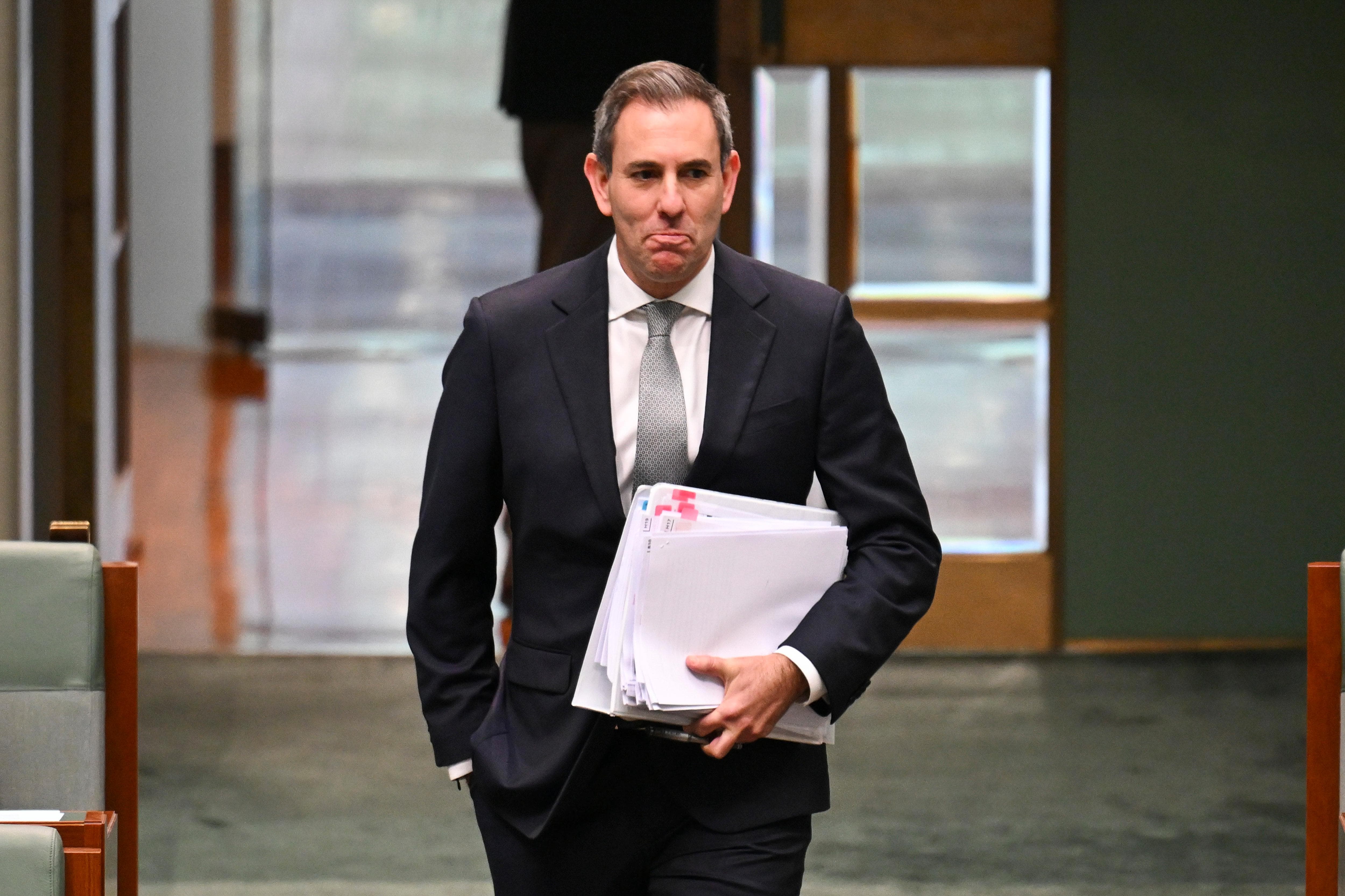
Image: Treasurer Jim Chalmers announced the proposed ban in the 2025-26 Federal Budget.
There is a widely circulated claim that non-compete clauses in employment contracts will be banned in Australia from 2027. Articles across the legal press, HR publications and mainstream media have reported this as though it is settled. It is not. No legislation has been introduced to parliament. No bill exists. No exposure draft has been published. What exists is a budget announcement, a Treasury consultation paper and a political commitment. These are not the same thing as law, and treating them as such is a mistake that could lead employers to prematurely weaken their contractual protections or lead employees to assume that existing restraints are unenforceable.
This article explains what has actually happened, what the law currently provides, why existing non-compete clauses remain fully enforceable and what the proposed reforms would do if they ever become legislation.
Need advice on restraint of trade clauses, enforcement or drafting? Contact Astris Law on (07) 3519 5616.
What Has Actually Happened
In March 2025, Treasurer Jim Chalmers announced in the 2025-26 Federal Budget that the government intended to ban non-compete clauses for workers earning below the high-income threshold under the Fair Work Act 2009 (Cth). That threshold is currently $183,100 per annum (indexed annually). The announcement was framed as a productivity and wage-growth measure, citing research from the e61 Institute indicating that approximately one in five Australian workers are subject to non-compete clauses and that firms without them pay approximately 4 per cent more.
On 25 July 2025, Treasury released a formal consultation paper titled "Reform to non-compete clauses and other restraints on workers" (reference c2025-681950). Submissions closed on 5 September 2025. Sixty-seven submissions were received, including eight confidential submissions. The consultation paper sought views on the scope of the proposed ban, whether it should extend to independent contractors, the treatment of non-solicitation clauses and the interaction with existing state legislation.
That is where the formal process ends as at May 2026. No exposure draft of a bill has been published. No bill has been introduced to the House of Representatives or the Senate. The Australian Parliament House bills database contains no legislation matching "non-compete", "employee mobility" or "restraint of trade" in the 2025 or 2026 sessions. The Parliamentary Library has published a research brief on the topic, confirming parliamentary interest, but a research brief is not a bill.
What Has Not Happened
No law has been enacted. No law has been introduced. No bill has been drafted in any publicly available form. The government has said it intends to introduce legislation "in 2026" with reforms commencing "from 2027". That aspiration is now over a year old and no bill has materialised.
This matters for three reasons.
First, budget announcements frequently do not translate into legislation. Governments announce policy intentions in budgets for political effect. Some proceed to legislation promptly. Others languish in the drafting process, are overtaken by events, are quietly shelved after stakeholder pushback or simply run out of parliamentary time. A political commitment in a budget speech has no legal force.
Second, even when bills are introduced, they do not always pass. The current Senate composition requires crossbench support for most legislation. Employer groups, franchise networks, professional services firms and parts of the startup sector have voiced strong opposition to a blanket ban. The drafting process must navigate genuine complexity around the interaction with state legislation, the treatment of contractors, the distinction between non-compete and non-solicitation clauses and the constitutional basis for the reform. Any of these issues could delay or materially alter the final legislation.
Third, and most immediately: the assumption that non-competes "will be banned" is causing real-world harm right now. Employees are assuming existing restraints cannot be enforced. Employers are hesitating to include restraints in new contracts. Neither position is justified by the current state of the law.
The Law As It Stands: Restraints of Trade Are Enforceable
The common law of restraint of trade in Australia has not changed. It operates today exactly as it did before the budget announcement. Non-compete clauses in employment contracts are enforceable if they satisfy the test for reasonableness established in Nordenfelt v Maxim Nordenfelt Guns and Ammunition Co Ltd [1894] AC 535 and applied consistently by Australian courts for over a century.
The reasonableness test
A restraint of trade is prima facie void and unenforceable. However, it will be upheld if the party seeking to enforce it demonstrates that it is reasonable in the interests of the parties and reasonable in the interests of the public. In practice, the public interest limb is almost never the basis for striking down an employment restraint. The contest is almost always over whether the restraint is reasonable between employer and employee.
Reasonableness is assessed by reference to three dimensions: the duration of the restraint, the geographic scope and the scope of the prohibited activity. A restraint must go no further than is reasonably necessary to protect the employer's legitimate interest. Restraints that are broader than necessary in any of these dimensions will be struck down.
Legitimate interests
The employer must identify a legitimate interest that the restraint protects. Mere protection against competition is not a legitimate interest. The recognised categories are: trade secrets and confidential information (pricing structures, customer data, technical know-how, strategic plans); customer connections (established relationships between the employee and the employer's clients that could be exploited to divert business); and workforce stability (in limited circumstances, the interest in preventing a departing employee from poaching colleagues).
A restraint that cannot be tied to one of these interests is unenforceable regardless of its duration or scope. This is the threshold question and it eliminates a substantial proportion of restraints before the reasonableness assessment even begins.
Cascading clauses
Because courts cannot rewrite an unreasonable restraint (outside New South Wales), standard drafting practice uses cascading or "waterfall" clauses. These present a series of progressively narrower restraints, for example: 24 months, 18 months, 12 months, 6 months and 3 months; within Queensland, within a 50-kilometre radius, within a 20-kilometre radius and within a 10-kilometre radius. The court severs the wider iterations and enforces the narrowest restraint that is reasonable in the circumstances.
The utility of cascading clauses is well established. In Woolworths Ltd v Olson [2004] NSWCA 372, the Court of Appeal enforced a 12-month restraint from a cascade that started at 24 months. The technique works because the court has options rather than facing a binary choice between the restraint as drafted (unreasonable) and no restraint at all.
The NSW exception
New South Wales operates under a different statutory framework. The Restraints of Trade Act 1976 (NSW) provides that a restraint is valid to the extent that it is not against public policy, whether or not the restraint is severable. Section 4(3) allows the court to read down a restraint to what is reasonable rather than applying the all-or-nothing approach that prevails at common law in other jurisdictions.
The practical consequence is that restraints are significantly more enforceable in New South Wales. Research consistently shows enforcement rates of approximately 50 to 56 per cent in NSW compared with approximately 30 to 35 per cent in other states. Employers with operations spanning multiple states should be aware that the same clause may be enforceable in NSW (where the court reads it down) and unenforceable in Queensland or Victoria (where the court must strike it out or sever portions using the blue pencil test).
Enforcement in practice
Courts regularly enforce reasonable non-compete clauses through interlocutory injunctions. The process is fast: an application for an injunction restraining breach can be heard within days of the employee commencing competing employment. The test for an interlocutory injunction in restraint cases is whether there is a serious question to be tried and whether the balance of convenience favours the grant of the injunction. Given that damages are generally inadequate (it is difficult to quantify the harm from lost customer relationships or leaked confidential information), courts are disposed to grant injunctive relief where the restraint appears reasonable on its face.
The critical practical point is this: an employee who assumes a restraint is unenforceable because of media reporting about a proposed ban is at serious risk. If the restraint is reasonable, the employer can obtain an injunction within days. The employee will be restrained from their new employment, will likely be ordered to pay the employer's costs of the application and will have damaged the relationship with their new employer before it has properly begun. The proposed ban, if it ever becomes law, will not have retrospective effect. Existing restraints remain enforceable until and unless legislation says otherwise.
What the Proposed Reforms Would Do (If Enacted)
Based on the Treasury consultation paper and the government's public statements, the proposed reforms would, if legislated:
Ban non-compete clauses in employment contracts for employees earning below the high-income threshold under the Fair Work Act ($183,100 per annum for FY2025-26, indexed annually). This covers approximately 91 per cent of employees covered by the Fair Work Act.
Introduce a prohibition on no-poach agreements between businesses, treating them as a competition law matter rather than an employment law matter. No-poach agreements are arrangements between two or more businesses not to hire each other's employees. The government characterises these as anti-competitive.
Introduce a prohibition on wage-fixing agreements between businesses, again treated as a competition law matter.
Restrict exclusive service clauses that prevent part-time and casual employees from working for other employers.
Matters still unresolved
Several significant design questions remain open from the consultation process. Whether the ban extends to independent contractors has not been determined. The consultation paper sought views but the government has not announced a position. The distinction between a contract of service (employment) and a contract for services (independent contracting) is well established, but applying a non-compete ban to contractors raises different policy considerations and potentially different constitutional issues.
The treatment of non-solicitation clauses is also unresolved. Non-solicitation clauses (which prevent a departing employee from actively soliciting the employer's clients or employees, but do not prevent them from competing generally) are distinct from non-compete clauses. The consultation paper asked whether non-solicitation clauses should be restricted, modified or left alone. There is a strong argument that non-solicitation clauses protect legitimate interests without unduly restricting employee mobility, and that banning them would go further than necessary.
Whether there will be exceptions for genuine protection of trade secrets is unclear. Some stakeholders argued that even below the income threshold, certain roles involve access to highly sensitive intellectual property where a time-limited restraint is the only practical protection. Whether the legislation will accommodate this through a narrow exception or simply leave employers to rely on standalone confidentiality obligations and equitable remedies for breach of confidence remains to be seen.
The interaction with state legislation, particularly the NSW Restraints of Trade Act 1976, has not been settled. If the federal ban is enacted as an amendment to the Fair Work Act or the Competition and Consumer Act 2010, it would likely override inconsistent state laws to the extent of the inconsistency under section 109 of the Constitution. But only to the extent applicable to constitutional corporations. Non-corporate employers in state systems may remain subject to the existing common law position.
The constitutional basis
The Commonwealth's power to legislate in this area is not unlimited. The most likely constitutional basis is the corporations power (section 51(xx)), which would confine the ban to constitutional corporations (broadly, trading and financial corporations). This is the same power that underpins the Fair Work Act itself. Alternatively, the ban could be framed as a competition law measure under the trade and commerce power (section 51(i)). Either way, there will be employers and employees who fall outside the Commonwealth's constitutional reach, particularly in state and local government, sole traders and unincorporated businesses.
What Employers Should Be Doing Now
The correct response to the proposed reforms is not to abandon restraints. It is to ensure that existing restraints are reasonable, properly drafted and capable of being enforced under the law as it currently stands.
Audit existing restraint clauses in employment contracts. Identify which employees are subject to non-competes, non-solicitation clauses or non-dealing clauses. Assess whether those restraints are reasonable by reference to the employee's role, their access to confidential information, their customer relationships and the duration and scope of the restraint. A restraint that is unreasonable today is unenforceable today, regardless of any future reform.
Ensure cascading clauses are properly structured. A single fixed restraint (for example, "12 months within Queensland") is a binary proposition in court: either reasonable and enforced, or unreasonable and struck out entirely. A cascading clause gives the court options. Proper cascading across duration, geography and scope of prohibited activity maximises the prospect of enforcement.
Strengthen standalone confidentiality obligations. If the non-compete ban is enacted, employers will need to rely more heavily on non-solicitation clauses (if those survive), non-dealing clauses, confidentiality obligations and equitable remedies for breach of confidence. These should be drafted as independent, self-contained protections rather than as ancillary to a non-compete clause that may not survive reform.
Do not weaken contracts prematurely. Removing or narrowing restraints now, in anticipation of a ban that does not yet exist and may never exist in its proposed form, gives away protection for no benefit. The reform, if enacted, will have a commencement date. Restraints entered into before that date will either be grandfathered or will become unenforceable from the commencement date. Either way, there is no advantage in pre-emptive surrender.
Consider garden leave clauses as a complementary protection. A garden leave clause allows the employer to require the employee to serve out their notice period without attending work, during which time they remain bound by their contractual duties of fidelity and cannot work for a competitor. Garden leave is not a restraint of trade (it operates during the employment relationship, not after it) and is unlikely to be affected by any non-compete ban. It provides a period of enforced absence from the market that serves many of the same protective functions as a post-employment restraint.
What Employees Should Know
If you are currently subject to a non-compete clause and are considering moving to a competitor, the proposed ban does not help you today. Your existing restraint is enforceable if it is reasonable. If you breach it, your former employer can obtain an injunction within days.
Before assuming a restraint is unenforceable, obtain legal advice on whether the specific clause in your contract satisfies the reasonableness test. Many restraints are poorly drafted, disproportionately broad or unsupported by a legitimate interest. These can be challenged successfully. But the challenge must be based on the existing law of restraint of trade, not on a political announcement about future reform.
If you are negotiating a new employment contract, the non-compete clause is negotiable. Many employees accept restraints without negotiation because they assume they are standard and non-negotiable. They are not. The scope, duration and geographic reach of a restraint can be narrowed during contract negotiations, and many employers will agree to modifications rather than lose a preferred candidate.
The Broader Context
The proposed reform sits within a broader policy agenda on labour mobility and competition. The government's framing emphasises that non-compete clauses suppress wages (by preventing workers from moving to higher-paying competitors), reduce innovation (by preventing knowledge transfer between firms) and entrench market concentration (by making it harder for new entrants to hire experienced staff). The e61 Institute research cited by Treasury found that workers subject to non-competes earn less than comparable workers without them and that the clauses are frequently applied to workers with no access to genuine trade secrets or confidential information.
There is substance to this critique. It is undeniable that non-compete clauses are over-used in Australia. They appear in contracts for retail workers, junior administrative staff, hairdressers and fitness instructors, none of whom possess trade secrets or customer connections that could justify a post-employment restraint. Courts already strike down these restraints as unreasonable, but enforcement requires litigation, and most employees lack the resources to challenge a restraint in court regardless of its enforceability. The proposed ban would remove the need for individual litigation by making the clauses void by operation of statute.
Whether that policy objective is best achieved by a blanket ban below an income threshold, or by a more targeted intervention that preserves the restraint framework for roles where legitimate interests genuinely exist, is a question the government has not yet answered in legislative form. Until it does, the existing law applies. Non-compete clauses are enforceable. Courts enforce them regularly. Employers and employees should conduct themselves accordingly.
For a deeper treatment of the underlying common law framework, see our companion article on non-compete and restraint of trade clauses in Australian employment.
This article is intended as general information only and does not constitute legal advice. You should obtain specific legal advice relevant to your circumstances before acting on any of the information in this article.
Sources and References
- Case lawNordenfelt v Maxim Nordenfelt Guns and Ammunition Co Ltd [1894] AC 535
- Case lawWoolworths Ltd v Olson [2004] NSWCA 372
- LegislationRestraints of Trade Act 1976 (NSW)
- LegislationFair Work Act 2009 (Cth)
- LegislationCompetition and Consumer Act 2010 (Cth)
- RegulatorTreasury, Reform to non-compete clauses and other restraints on workers (c2025-681950, 25 July 2025)
- Other2025-26 Federal Budget (March 2025)
This article is for general information purposes only and does not constitute legal advice and should not be relied on as such. While we take reasonable care to ensure the accuracy of the information provided, we make no representations or warranties as to its completeness, currency or reliability. We accept no liability for any loss or damage arising directly or indirectly from the use of, or reliance on, this website's content. You should always seek professional advice tailored to your specific circumstances before acting on any information in this article. Liability limited by a scheme approved under Professional Standards Legislation.
Need advice on restraint of trade clauses, enforcement or drafting?
We advise employers and employees on restraint enforcement, defence, drafting and negotiation.